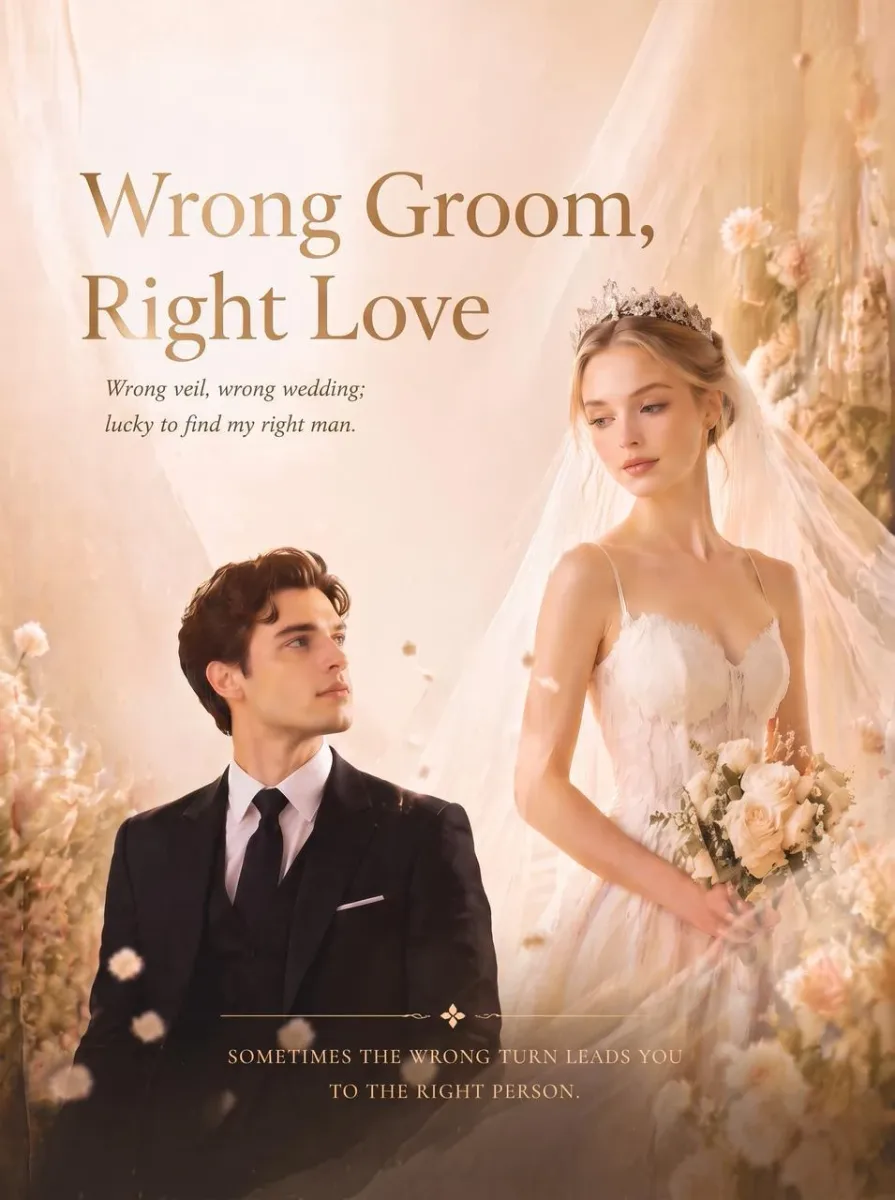
Two Brides Check In at the Same Hotel
Somewhere in the wedding business there ought to be a form with a box marked “Have you checked inside the veil?” Wrong Groom, Right Love makes an excellent case for introducing one. Two bridal parties have business at the same hotel on the same day. Two brides are dressed to leave under escort, their faces covered. In the hurry to get everybody where they are supposed to be, the processions exchange the women. A great many people have evidently gone to considerable trouble to ensure that the ceremonies will take place. Recognizing the participants turns out to be the weak point in the arrangements.
Before the mix-up
On one side of the ledger are Sophia and Ethan Carter. Sophia has listened to her mother in agreeing to the match. Ethan himself is conspicuously susceptible to maternal influence. This is an inspired piece of advance troublemaking by the writers. Even if the cars all went where they were meant to go, one could reasonably wonder how much of a say the two people entering this marriage would have in running it. The mistake may be the first development of the day for which neither family can plausibly claim credit.
On the other side are Zane Lam and Molly Foster. Molly is an heiress with a temper, a quality that ought to make it difficult for anybody to mistake her for the more compliant Sophia. Cover both women with veils, however, and personality is surprisingly easy to discount. What the surrounding parties need at that moment is a bride in the correct place at the appointed time. The comic business of the processions has a little sting to it. These people have taken such good care of the timetable that they can apparently carry on with the ceremony after losing track of the woman for whom it was arranged.
Genre and themes
Primary genre: Romantic farce. Themes: switched brides, parental matchmaking, mistaken identity, simultaneous weddings.
The appeal of a double booking
The hotel is just the right setting. Private family plans have to pass through a shared space whose staff and guests cannot be expected to know the difference between one procession and another. In a private house an aunt might intervene simply because she recognized a voice. The veil supplies concealment without requiring a villain to tamper with anybody's appearance. Haste supplies the final ingredient. A viewer can laugh at the absurdity of the result while keeping a fairly clear account of what it took to produce it. Farce needs that clarity. There is a pleasure in seeing exactly how people who believe themselves to be acting sensibly have brought about something ridiculous.
The switch also creates two prospective relationships at once. Put Sophia beside somebody her mother did not select and even an ordinary preference of hers becomes newly interesting. Does she like what she hears for reasons of her own? Put Molly in the path of a man accustomed to being guided by his mother and the question takes a different form. How much room will there be for another strong opinion in Ethan's life? These are possibilities generated by the mix-up, and the audience has the fun of considering both before anybody can sort out the transport.
Whether the original matches should be restored is a subtler issue than whether they can be. Correcting the mistake would give everybody the wedding they arranged and let both families carry on as if their judgment had never been in doubt. Treating the accident as an opportunity would mean admitting that an afternoon's confusion might have produced a more promising introduction than all that careful parental planning. Sophia in particular has something to lose by finding the wrong groom agreeable. She would have to give her mother an account of a preference she had formed entirely on her own. The hotel has handed her an alibi. Enjoying the mistake would be the part she would have to own.
A useful test for a farce is to imagine it played twice. The first time, follow the escorts. They have a schedule, a bride to deliver and no obvious incentive to slow everybody down while they check the identity of somebody who surely knows where she is going. The second time, follow Sophia. How much of her day until this point has involved trusting that other people know where she ought to be? The same piece of misdirection is a logistical joke on the first pass and an unexpectedly pointed observation about her upbringing on the second.
The sixty-three episodes are a proposition for people who enjoy the aftermath of a comic disaster as much as the disaster itself. At some point the hotel will cease to be confusing, the veils will come off, and four articulate adults will have ample opportunity to give directions. I would be much more interested in hearing Sophia give hers than in hearing an organizer explain the error. For perhaps the first time all day, somebody might actually have to ask this bride where she wants to go.
Main Characters
 Sophia
 arrives at a hotel for her own wedding and is caught in a last-minute veil mix-up. The mistake sends her into a marriage she did not plan, with feelings to sort out afterward.
 Ethan Carter
 is the groom connected to Sophia’s hurried wedding-day handover. His family’s matchmaking helps turn a logistical mistake into the possibility of a genuine match.
- Zane Lam
Zane Lam is part of the second wedding caught up in the hotel’s veil confusion. The mix-up puts parental plans and the couples’ own choices in uneasy competition.
- Molly Foster
Molly is a bride arriving for a separate wedding at the same hotel as Sophia. The exchanged veils tangle the plans her family made for her future.
Frequently asked questions
Which couples intend to marry?+
Sophia is meant to marry Ethan Carter. Molly Foster is meant to marry Zane Lam.
How do the brides get switched?+
The veiled brides cross paths at a hotel and the hurried wedding processions take the wrong women.



