
There is a dragon at the bottom of Sleeping Dragon Pool, and somebody has gone to considerable trouble to keep him there. The prisoner is Oren Aurel, the East Sea’s second prince. His elder brother, Ao Yan, has taken his dragon blood and left him bound. The person who comes across him is Chasen Shaw, a woodcutter with a sick daughter. He has stumbled into a royal dispute of a kind most people would be grateful to leave where they found it.
The stranger in the water
Chasen breaks the dragon-sealing chains. On a simple level it’s the incident that gets the adventure going, a mortal physically interrupting something that was done by a powerful family. The more appealing detail is what Chasen stands to gain at the moment he acts. The help he could use at home is obvious to us. The dragon is dying, and the prospect of some benefit to Chasen is uncertain until he’s already decided to release him.
That uncertainty gives the hero’s choice more weight. His daughter Mia needs care, and someone in his circumstances can justify turning away from an injured stranger whose enemies he knows nothing about. The prospect of involving himself in a quarrel between dragon princes offers further reason to leave. The story makes a plain decision about someone in peril the point where Chasen moves onto ground he doesn’t understand.
What the brothers did with their power
Ao Yan is a particularly effective source of danger in the opening because of his relationship to Oren. Taking his brother’s blood and leaving him in chains makes the threat intimate. Oren has been made vulnerable by someone who already had a place in his life, and the location puts real distance between him and the status implied by his title. A man of much lower standing can help him because that standing has little bearing on whether Chasen is willing to do the work.
There’s a neat reversal in the next move. Oren learns about Mia’s illness and offers Chasen a Dragon Pearl that can help her. The prince who had been unable to free himself is in a position to help once somebody else gives him the chance. He has at least two ways to respond to Chasen. He could accept his freedom as something due to him, or learn what the man who released him needs. The second choice gives Oren a recognizable character beyond the injury inflicted on him.
Mia supplies the grounding concern for both men. Because there’s a child at home, the pearl has a use the viewer can grasp without being introduced to a whole set of magical applications. Chasen needs it to help someone he knows well. For Oren, giving it away means recognizing a problem that has no immediate connection to his brother or the East Sea.
A small rescue and a much bigger world
The pool, the chains and the pearl give the first part of the story three concrete points of attention. The pool marks a passage from a woodcutter’s concerns into somewhere he has no standing. The chains show how badly things have gone for a royal figure without needing a lengthy account of court life. The pearl takes the consequences of the encounter back to Mia. It’s a concise progression for a fantasy with family obligations at both ends. Every discovery brings the action closer to a decision.
The opening also puts a useful limit on how much terminology the audience needs. You can understand that a man has been betrayed, held underwater and deprived of something essential to his strength before knowing anything about dragon royalty. Likewise, anybody can understand why a father cares about whether a gift will help his daughter. That clarity leaves some space to absorb the unfamiliar elements of the setting.
There’s a trade-off. A gift with such direct healing power can move the story through a problem very quickly. The early material supports a clear reading of this first exchange, while the longer consequences of a dragon prince being set free have room to take the series in several directions. The setup is at its strongest when the magical turn remains a response to someone’s choice, as it is here. Chasen joins in as an ordinary man lending a hand, and Oren sends what he can offer back in the opposite direction.
Genre & Themes
Primary genre — Cultivation fantasy adventure
Tags — Dragon Princes, Family Loyalty, Magical Healing, Acts of Reciprocity
A reason to sample it
The use of a grateful supernatural being is traditional. Many folktales bring an ordinary traveler into contact with a powerful creature damaged or trapped by others. The particular variation here is the difference between the two families. One ruler’s son has suffered at his brother’s hands. A woodcutter is trying to keep his own child well. Connecting those concerns through an exchange of help gives the fantastical elements a human scale.
It’s a good pick for readers who enjoy mythic adventure with an immediate family stake and a hero introduced through a useful act. If your reason for watching cultivation fantasy is the intricacy of its factions or systems of power, the first attraction here is simpler. Start with a man in chains and a man with reason to hurry home. See how much world the story can open up from the moment the second one stops to see what he can do.
Main Characters
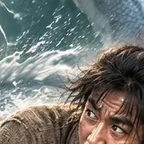 Chasen Shaw
Chasen is a woodcutter whose sick daughter gives him urgent reasons to seek help. He frees a chained dragon prince anyway, drawing himself into a royal feud he could easily have avoided.
- Mia
Mia is Chasen’s sick daughter, the person whose need for treatment motivates his search. Her illness gives Oren’s offer of a Dragon Pearl a concrete purpose beyond the princes’ conflict.
 Ao Yan
 is the elder dragon prince who took his brother’s dragon blood and left him bound. His betrayal makes the royal conflict personal before Chasen understands its scale.
- Oren Aurel
Oren is the East Sea’s second prince, imprisoned at Sleeping Dragon Pool by his brother. Once Chasen frees him, he repays that choice by offering the Dragon Pearl that may help Mia.



