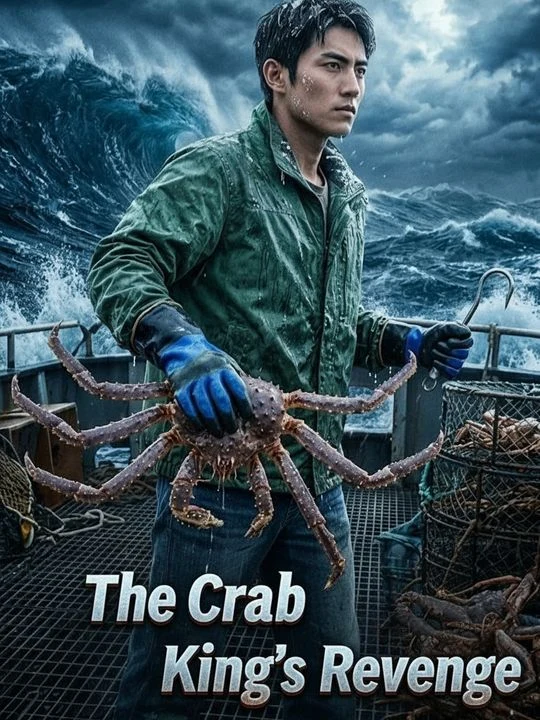
The man who steals Finn's crab-fishing method assumes that the thing he has taken is complete. He has a way to reproduce what he thinks is an inherited bait, and he has retired the person who knows why the method works. The two choices make a neat opening for an ocean-set revenge drama. Finn has good reason to want the work and the standing his former partner has taken from him. His rival now has to apply that knowledge somewhere a bad assumption can carry considerably more weight than a failed sales pitch.
Genre and themes
Primary genre — Maritime adventure Themes — Revenge drama, betrayal, apprenticeship and expertise, underdog rise, survival
The cost of running a boat with secondhand judgment
Finn is an experienced crab fisherman with a method connected to his family. Being pushed out of the partnership takes away a means of using that knowledge without making the knowledge itself any less valuable. It does make his next decision more dangerous. He has to find a way to establish himself again, and there is a limit to what a person can demonstrate on well-traveled ground without access to the resources his former partner has kept. He turns his attention to the Glacial Death Zone, where the possibility of finding Black Diamond King Crabs comes attached to a name that gives a prudent person every excuse to reconsider.
There is an appealingly practical piece of characterization in his choice. Finn is willing to take on the water his competitors would prefer to avoid. That tells us how useful it is for him to have an independent chance to test his judgment. It also makes his desire for vindication an unsettled prospect. The more valuable the catch might be, the harder he has to think about whether he is embarking on a worthwhile fishing trip or trying to prove something about the person who treated him as expendable. The show can put those motives on the same boat without pretending they will always take him in the same direction.
His former partner has a much poorer reason to feel secure. With a thing acquired from Finn, he can point to something that looks like the source of Finn's results. What he lacks is the ability to tell where the method has stopped working. The plot gets sharper once that difference becomes a matter of who will listen when conditions change. A person who took a shortcut to securing his role has an obvious incentive to claim the shortcut is sound when others are depending on him. The drama lets the original theft have consequences after the insult has worn off.
A valuable catch is only half the story
Finding the Black Diamond crabs is an important change in Finn's position. He obtains something substantial enough to make the gamble intelligible to people who were never likely to care about the fairness of his dismissal. The discovery also has a useful specificity. Many comeback stories have a surprise fortune waiting somewhere behind the next large risk. Here, the windfall belongs to the world the fisherman already understands. A better catch is worth something because he can see what to do with it and because he knows what reaching it has taken. Viewers get a test of the man's existing craft at the point where the narrative could easily have given him an entirely different source of wealth.
The rival expedition supplies a much harsher answer to what the stolen method was worth. The counterfeit bait and the shark encounter lead to the loss of a vessel and lives. That turn gives the adventure a darker cast than the initial business grievance might suggest. It also keeps the repercussions from being as simple as Finn getting richer than a man he dislikes. People who had little to do with the dispute have gone out on somebody's assurance that he understands the work. One of the series' sharper ideas is that appropriating credit at the shore can turn into exposing other people to a danger the person taking credit is unprepared to judge.
You can dispatch the betrayal onshore as quickly as the series does. Offshore, a bit of waiting is part of the pleasure. Finn has to sit with a decision while the boat moves and the sea gives him very little back. I wanted a little more of that, especially once the rival's voyage is headed toward catastrophe. There are people on his vessel who must have believed his confidence was worth something. Their decision to go out with him stays with me longer than the sight of things going wrong, because a boat leaves port while everyone still has time to turn around.
There are familiar rewards in seeing the knowledgeable worker outdo the person who pushed him aside. The cold-water setting makes those rewards less interchangeable. A result that would be a tidy proof of competence in a meeting room has to be brought back from somewhere dangerous. The most rewarding audience for the series may be people who like watching a trade practiced by somebody with good reason to think the details matter. It is a harsher prospect for viewers who want a light workplace comeuppance. The sea gives Finn a way to show that his judgment mattered all along. It also makes the rival's indifference to that judgment matter to people who never wanted to be involved.
Main Characters
 Finn
An experienced crab fisherman who must build an independent livelihood after betrayal.
- Finn's former partner
Takes the family method and assumes it will supply the judgment Finn once contributed.
Frequently asked questions
What is Finn trying to catch in the Glacial Death Zone?+
He is looking for the valuable Black Diamond King Crabs.
How many episodes does The Crab King's Revenge have?+
This edition is listed at 49 episodes.
Where can I watch The Crab King's Revenge online?+
Use the Watch on TikTok button to open the linked TikTok listing. Episode availability can vary by region.



