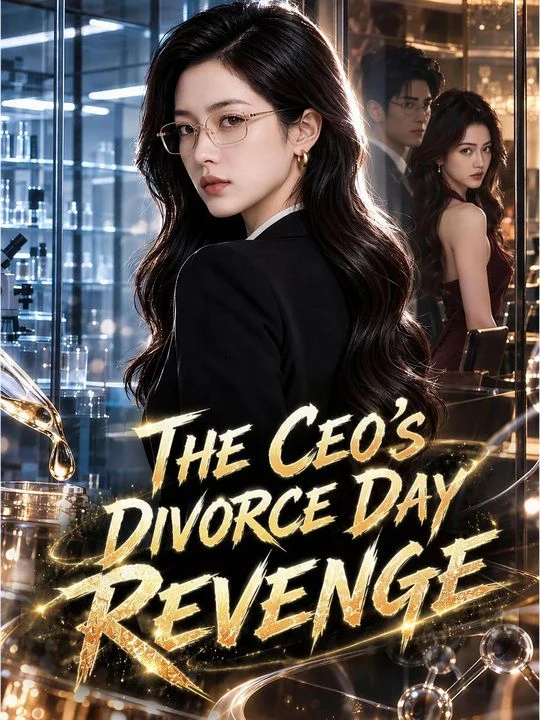
Verve Cosmetics has a problem most of its leadership could have avoided by taking the work that kept the company alive a little more seriously. For a decade, Zoe Sterling has developed the science behind the business. Her husband, Cain Grant, and his ally Marnie Jordan take away Zoe's shares and her position. The people responsible appear to believe they can keep everything they associate with a successful cosmetics company after removing the woman who designed the formulas. Zoe responds by withdrawing thirty-five core formulation patents and demanding three billion in compensation. Anyone who thought the separation would be handled as a private matter is about to learn how little separation there was between the marriage and the company's operating assumptions.
The part of the company that walks out
This is a boardroom melodrama with a useful sense of what the products are made of. Zoe isn't a vague executive genius. She is a research scientist, and Cain has relied on almost a decade of her work to turn around a business that had once been in danger of collapse. His decision to force her out suggests he thinks a good position on an organizational chart counts for more than knowledge that took years to develop. Marnie benefits directly from that belief. Even where her exact plans diverge from Cain's, she needs the company to continue behaving as though the person who owned the formulas was a replaceable member of staff.
Zoe's demand puts a price on what they wanted to treat as incidental. There is a satisfying distinction between the act of withdrawing the patents and the act of asking for compensation. The first deprives the company of the means to continue relying on her. The second insists that what has already been taken has a value the people in charge must reckon with. Both moves are blunt enough for a short drama to explain quickly. They give viewers an immediate question that holds up beyond the opening grievance. How much of Verve did Cain and Marnie actually know how to run?
Genre and themes
Primary genre — Business melodrama Themes — Workplace betrayal, divorce, intellectual property, revenge drama
What counterfeiting competence costs
A lesser script could follow the patent reversal with a string of meetings in which people say they have finally appreciated Zoe. Here the business attempts to work around her. Substitute formulas and dubious connections offer the people left in charge a route back to something resembling normal operations, and their failures force shareholders to revisit whom they trusted. The shifting position of the shareholders has more bite because people who have a financial stake can afford to ignore office cruelty up to the point where it begins to threaten the business. They now need Zoe's participation in a place where she has an excellent reason to be suspicious of renewed enthusiasm.
That gives Zoe a credible dilemma even when the story has made her technical advantage obvious. Walking away would protect her from people who have shown what they are willing to do once she becomes inconvenient. It would also mean leaving a business she rebuilt, along with the value tied up in the reputation and work she accumulated there. Returning on someone else's terms risks repeating the arrangement that ended with her out of a job. Zoe has to decide what she would need to control before her contribution can have a future. The answer to that question matters more than whether Cain understands the personal insult.
A fast divorce and a slow correction
Cain and Marnie get rid of Zoe in a hurry. Replacing her is the slow part. It would spoil the fun if the first batch of substitute formulas failed and every shareholder immediately admitted the mistake. People with money tied up in the business have to try their own explanations and discover how little any of them can do at a lab bench. The serial can get carried away with the number of humiliations it wants to deliver. I prefer the plainest ones. If you've ever seen a former colleague's contribution rediscovered after they left, some of these meetings will feel uncomfortably recognizable.
A dispossessed spouse turning the tables is an old story, and Verve's internal contest borrows familiar rewards from it. The adjustment that makes this version worth trying is where Zoe's leverage comes from. Knowledge relevant to a particular product gives her an advantage that cannot be explained entirely by inheritance, a new benefactor or a surprise title. When other people need her back, they are tacitly admitting what the daily operation of the business required while they were still able to take credit for it.
Anyone who enjoys workplace stories about the person who actually knows how things work will find a great deal to like in the opening reversal. Viewers looking for a delicate account of a marriage ending will probably wish the company took up less space. For the audience willing to watch the divorce play out through a company's dependence on a scientist, every unsuccessful shortcut after Zoe's departure gives the story another way to say what the marriage had obscured. She contributed something the other people could neither appropriate forever nor reproduce on command.
Main Characters
 Zoe Sterling
A research scientist whose formulas helped transform Verve Cosmetics.
 Cain Grant
Zoe's husband, who helps take away her shares and position.
 Marnie Jordan
Cain's ally in the takeover, dependent on keeping the company running.
Frequently asked questions
What gives Zoe leverage after losing her job?+
She controls thirty-five core cosmetics patents that Verve cannot readily replace.
How many episodes does The CEO's Divorce Day Revenge have?+
This edition is listed at 139 episodes.
Where can I watch The CEO's Divorce Day Revenge online?+
Use the Watch on TikTok button to open the linked TikTok listing. Episode availability can vary by region.



