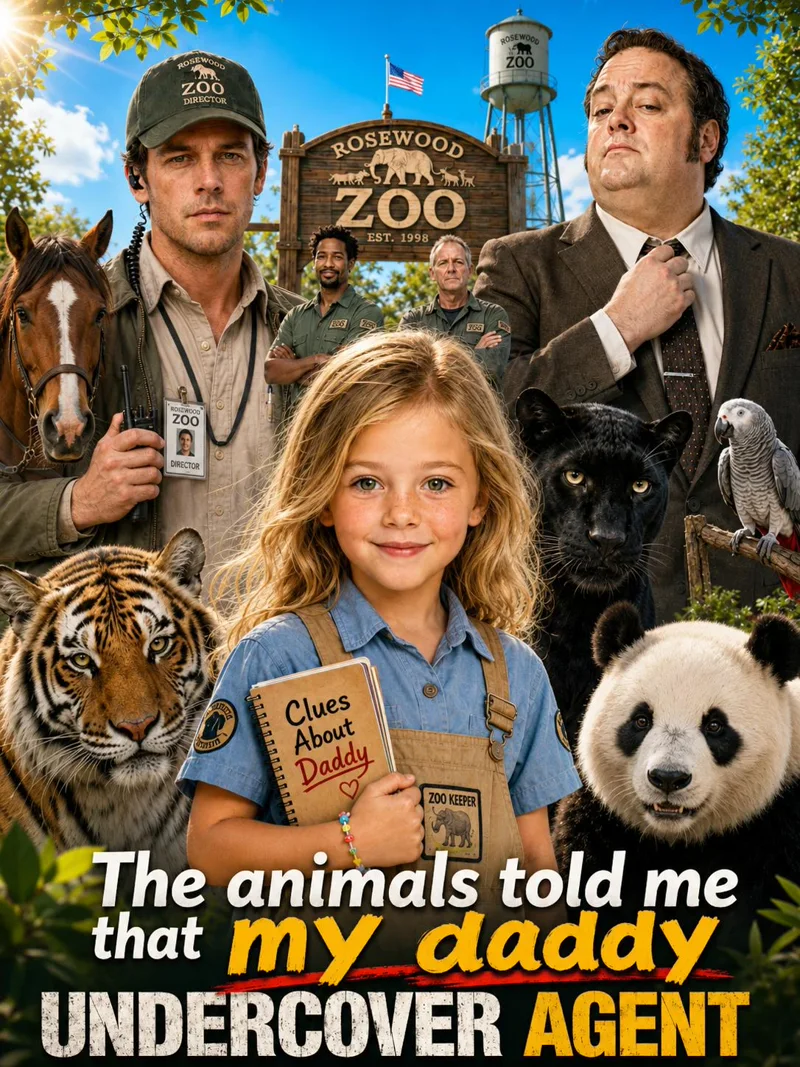
A five-year-old goes to the zoo to find her father. A tiger swallows her only keepsake. If this were merely an adventure about a girl with powers, the animal would be one more obstacle to display them against. The loss is sharper than that. It removes the one possession the girl has been able to attach to the person she is looking for. Her unusual ability might make the animals useful to her, but it does not make the things she needs from the world easy to obtain. Within a few beats, the drama has given extraordinary means to a child with a completely ordinary reason to want them.
I like that her first destination is a public institution rather than a private room full of adults who could answer the question for her. A zoo has a layout she can enter and a separation between visitor and animal that normally means something obvious. The story alters that arrangement for her. She has reasons to pay attention to creatures other people merely see or read about on signs. The tiger, however, is still a body big enough to eat the evidence. That mixture of possibility and physical alarm gives the setting more work than a noisy background could do.
The father is an absent person and also, as the title advertises, a person whose occupation depends on not being easy to identify. The two things create different kinds of suspense. Searching for him is a question of connection for his daughter. What she treats as a personal clue could have a very different meaning to someone whose work calls for concealment. The show can therefore ask the viewer to keep two measures of success in mind. Getting an answer about whom she is looking for and finding a safe way to be with him may not prove to be the same achievement. Giving the father a reason to need secrecy makes the girl's need for a straightforward acknowledgment matter more.
A clue with teeth
The keepsake is a good screen object because a young viewer can understand what has happened to it without a story about official documents. When it goes down the tiger's throat, losing it is both abrupt and peculiar to this drama. A child would normally have to go straight to an adult who knows what to do in a zoo. This one has reason to believe the other inhabitants could help her. Relying on them carries an obvious cost. She must make decisions using information that the people around her may have no way to recognize as information. Asking for ordinary help might bring her the protection of an adult while exposing how little tangible evidence she can now show.
The setup is a neat way to make a power limited by the age and experience of the person who has it. Adults in a family mystery can hire help, make calls and assemble records. A girl with access to animal conversations may get to an observation before them and still have trouble making herself understood. The most interesting thing about her persistence is that it asks for a little judgment. She goes to the zoo with a plan, loses the object the plan depended on, and has to continue in a situation where the obvious witnesses are exceptionally odd ones. I would rather watch her try to make sense of a clue than have the ability supply a string of convenient answers. The former gives her a character. The latter would turn the animal cast into magical search results.
There are at least two clean changes of gear before the plot has to give much away. Going to the zoo is an active first step that replaces waiting at home with a destination. The tiger's interruption converts the search from one with a keepsake to one in which recovering or replacing evidence becomes a problem in itself. The undercover premise offers a later escalation of a different kind. It can turn what looks from one angle like a child's reunion story into a question of why it is difficult to find this particular adult. Resting on a clue long enough for us to see it as the girl sees it would do more good between those turns than another emergency. Too many discoveries in a row would make her lack of a conventional source of help feel cosmetic.
I came for the apparent mismatch between the child's age and the spy title. I would stay for the smaller mismatch between a tiger's view of an object and a girl's idea of why she has to get it back. People looking mainly for an undercover thriller may wish the adult tradecraft took up more room. The premise is most distinctive for viewers who like family fantasy with a resourceful child and a reason for the animal characters to matter to the story. In this case finding a father starts with a loss that would usually be played for a joke. The drama gets a surprising amount of feeling out of treating that loss as seriously as its little investigator does.
Frequently asked questions
What happens to the girl's clue at the zoo?+
A tiger swallows the keepsake she brought on her search for her father. Her ability to communicate with animals gives her another way to pursue the trail.



