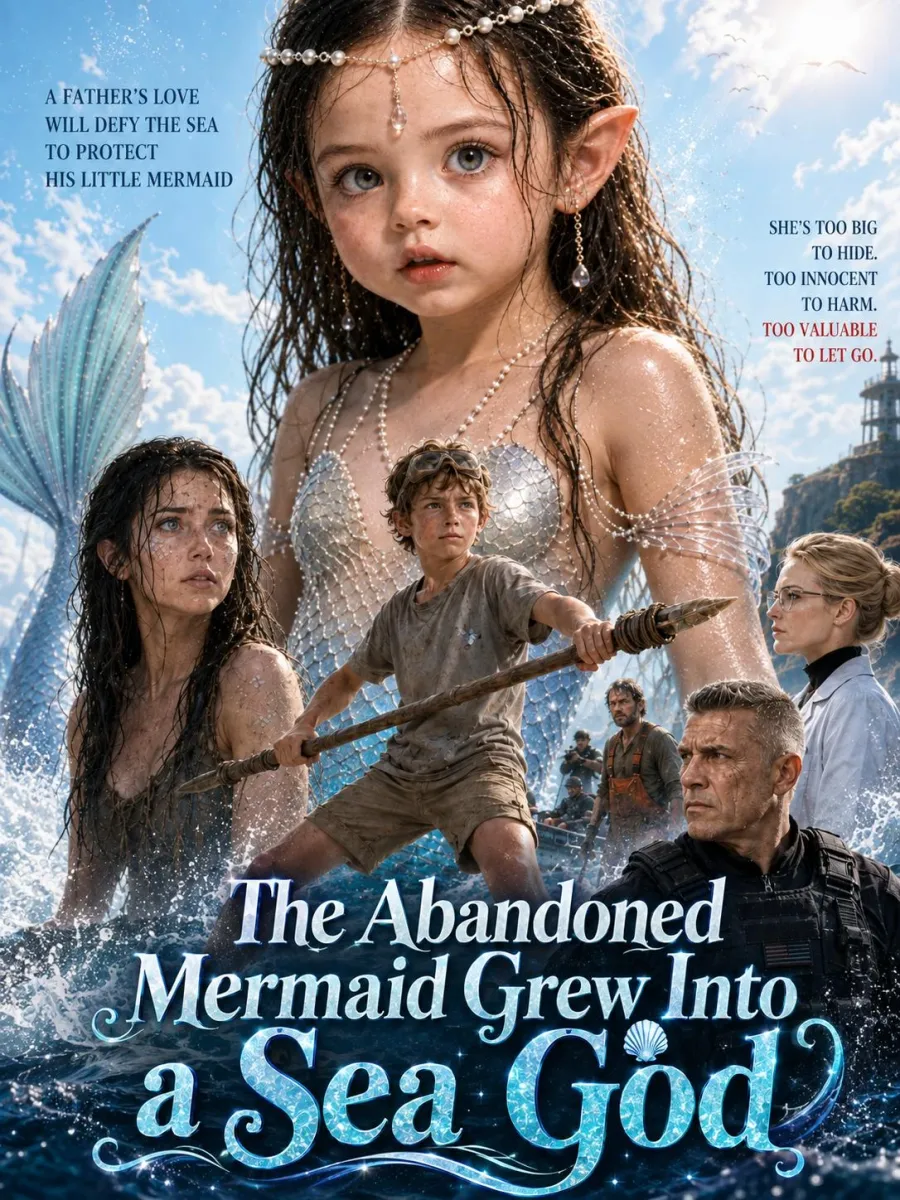
The Pearl Is the Terrifying Part of This Mermaid Story
A little girl cries and someone else gets richer. Strip away the scales and the sea magic and that is the decidedly nasty proposition at the heart of The Abandoned Mermaid Grew Into a Sea God. A pearl would ordinarily make a lovely token of a mermaid's gratitude. Making pearls the product of tears changes the terms of the fairy tale. A stranger who knows the secret has a financial interest in the child having another bad day. Few short fantasies find so economical a way to explain exactly why their heroine is in danger.
Genre and themes
Primary genre: Dark fairy-tale fantasy. Themes: mermaid folklore, childhood abandonment, chosen family, exploitation, oceanic power.
Two people at the water's edge
The first person to abandon the mermaid is her own human mother. She casts the child into the ocean, an act that would finish a very different story almost before it began. Here it brings the child into a world she can survive and leaves her exposed to treatment no parent ought to countenance. Being able to live in the sea does very little to answer the ordinary question of who is supposed to look after a baby. A human boy who takes her in supplies the first meaningful answer.
That makes two human beings confronting the same extraordinary creature with quite different ideas about what she is owed. The adult with the strongest obligation sends her away. A boy without any comparable duty makes room for her. The contrast gives the fantasy some moral precision before it introduces its larger claims about greed and punishment. The mermaid has an excellent reason to fear human beings. She also has personal experience of one who treated her generously when he could have walked away. Any reckoning between land and sea will have to accommodate both facts.
The boy matters because his kindness precedes the calculation that attracts the hunters. There is a world of difference between the person who sees an abandoned child and the person who sees a renewable source of pearls. If you have ever found a fairy-tale villain's hunger for treasure a little abstract, this story offers a particularly intelligible version of it. The treasure can keep arriving for as long as somebody has custody of its source. Finding the mermaid once is much less valuable to a greedy person than acquiring control over what happens to her next.
What the hunters understand about tears
Ordinarily a tear is an excellent reason to pause. It tells somebody nearby that a person may need comfort, and in the case of a child it can be the only signal available. The magic reverses the incentive to respond. Anybody impatient for another pearl has a reason to let distress continue. That is a genuinely imaginative change to a familiar creature and it lends the pursuit a discomfort that a race after buried gold would lack. You can understand why the mermaid needs allies without being told what every single hunter plans to do.
As the search becomes deadly, the small domestic scale of the early encounter gives way to the possibility of catastrophe. The title discloses the direction of that change in advance. We know that this child is going to acquire power vastly beyond the ability to make something desirable in the palm of a hand. The suspense lies in wondering what such a power will look like to someone whose earliest experiences include abandonment and shelter in such quick succession. The human boy has given her a reason to remember distinctions among the people on shore.
I like the way the story changes the size of what we are invited to imagine. First there is a mother and a small body she can physically cast away. Then there is a pearl small enough to collect. Eventually there is a force of the ocean against which an individual person can do very little. Each shift in size changes who has the ability to hurt whom. It is a natural rhythm for a thirty-part short series, with a clear escalation even for viewers who know the destination from the poster.
Spectacle also presents the adaptation with its hardest problem. The larger the threat becomes, the easier it is for a particular act of everyday kindness to disappear from sight. A grand punishment visited on humanity in general would be a cruder idea than the drama begins with. The early scenes draw exceptionally fine distinctions between a woman who relinquishes a child, a boy who assumes responsibility and people who see a chance for profit. I would judge the promised sea god by how much of that little girl's knowledge of human variety survives her growth.
A pearl can pass from hand to hand long after the circumstances in which it was made have been forgotten. That gives the story a nasty afterlife in the imagination. Picture the person who eventually owns one, turning a beautiful object over in the light. How much would its owner care to learn about the original transaction? The human boy who took the mermaid in has an answer to that whole economy. He has already given the child something precious: an occasion on which she has every reason to stop crying.
Frequently asked questions
Why do people hunt the mermaid?+
Her tears become pearls, giving greedy people a financial reason to keep her under their control.
Who helps the child after she is abandoned?+
A human boy takes her in after her mother casts her into the sea.



