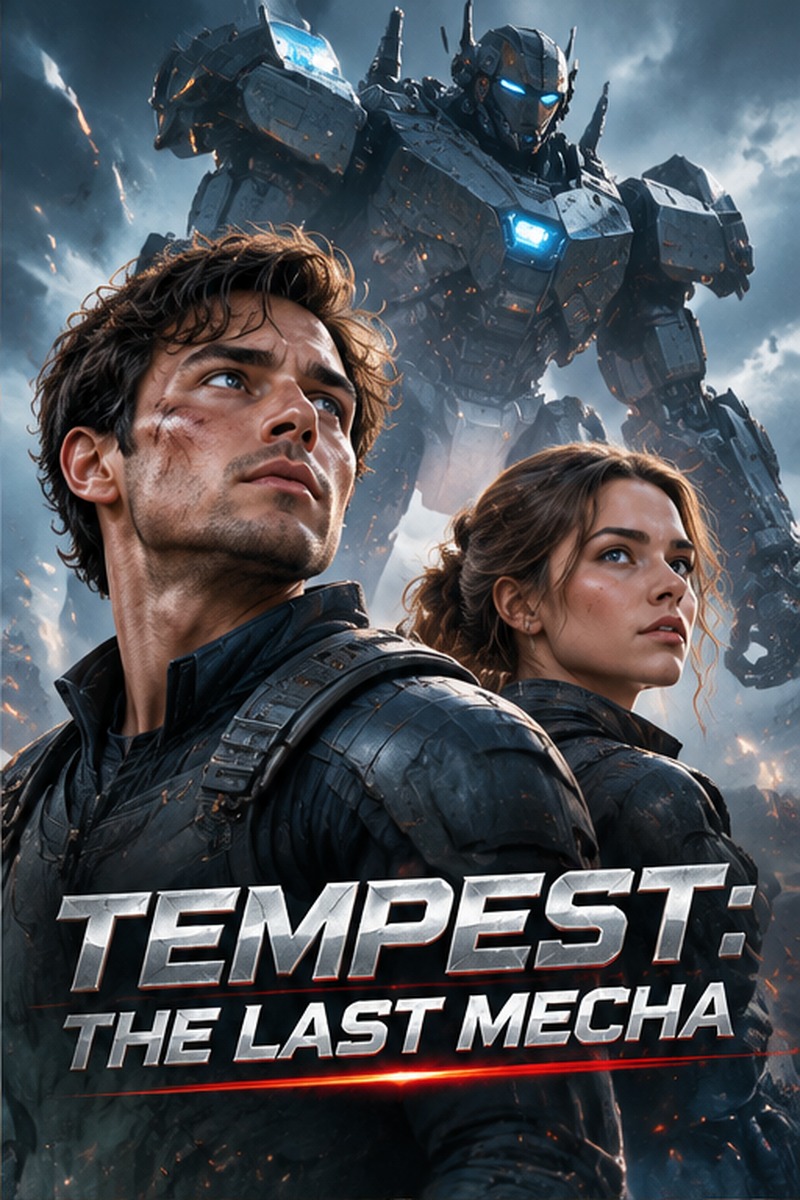
Colt Thorne has a job that lets him pass through the day without anybody asking what he used to do. He’s a janitor. He was also the Mech King, a pilot who stepped away after his parents died and whose skill would put him in an entirely different position if people knew what he could still do. The arrangement works until Freya, the woman who helped him through that loss, is betrayed and forced into a duel that could kill her.
Freya knew him after the applause stopped
A celebrated pilot often comes to a comeback story with a professional score to settle. Here the debt is personal. Freya helped Colt at the point when his reputation was of least use to him, and he has feelings for her that he’s kept to himself. The duel makes him confront the choice his quiet life has allowed him to postpone. He can stay safely out of view, or he can use a part of his past that he’s spent years trying to leave behind.
That reliance runs in both directions. The immediate setup puts Freya in danger and gives Colt the means to act. The backstory has already put him in a position of need and given her a decision to make on his behalf. It’s an economical way to give their relationship history. Viewers have a reason to care about the two people together well before the story has established what might happen between them romantically.
What 100 percent Neural Sync buys the story
Mecha fiction depends in part on the pleasure of seeing the right person get inside the right machine. Colt can reach the legendary 100 percent Neural Sync and operate the Tempest. The number gives the audience a simple way into the technology. We know how exceptional the feat is without needing a review of the engineering. More important, we know whose hands the ability is in and what returning to the cockpit will cost him.
There’s a satisfying reversal built into the choice of a janitor as Colt’s present occupation. His life gives other people ample reason to pass by without noticing him, just as his old life made him impossible to overlook. The hidden-champion reveal makes those two versions of the man collide. The story can get the usual rush out of an unassuming worker turning out to be a singular pilot and also make the exposure feel like a loss. Colt has spent a long time arranging for people to pay him less attention.
The first fight sets the pace for a much bigger one
The forced duel has a person, a deadline and a concrete outcome to fear. It gives the short a brisk entry into the action and makes Colt’s reasons easy to follow. When an alien swarm raises the threat to extinction, the scale changes from saving somebody he loves to trying to preserve a world. That’s classic mecha escalation, and the contrast gives the Tempest a reason to feel increasingly consequential.
The jump can also crowd the quieter story. An approaching extinction event takes up a great deal of narrative space. There’s a risk that Freya, who made Colt’s return matter, becomes less central once the public danger arrives. The most persuasive through line in the premise is the one the early parts have already established. A man who had stopped seeing a future for himself has a reason to make sure somebody else gets one. The larger action can extend that concern to a whole population, provided the scale of the threat leaves room for the smaller connection.
A comeback with something to lose
Colt’s arc has a clear before and after available to it. He goes from avoiding the demands of being the Mech King to accepting that his old ability brings obligations he can’t walk away from. The emotional strength of the setup lies in how reluctantly that process begins. In a story about pilots and machines, it’s easy to treat the ultimate technical capability as the most interesting fact about its hero. Colt’s grief helps explain why having the capability hasn’t been enough to get him back into action.
Freya is important to the quality of that writing. The rescue can feel reciprocal because of what she’s already done for him. It can also flatten into a routine hero-saves-the-woman scenario if her place in his life is reduced to the duel. The background gives the character more weight than the initial jeopardy might suggest. That’s the part of the relationship worth watching as the story builds outward.
There’s some discipline in making the first danger a duel. A larger opening might show more of the world, but a duel tells us much more quickly what Colt stands to lose. The swarm can then widen an argument about responsibility that the early story has already made intelligible.
Who should watch it?
The genre mix is science-fiction action, mecha comeback story and romance under pressure. The ingredients are recognizable all the way to the alien threat. What gives the short its own angle is the order in which it asks Colt to fight. The private reason comes first. Once you can see why he’d give up his anonymity to help Freya, the prospect of his taking on a much larger responsibility has some history behind it.
It’s a strong choice for viewers looking for a battle-heavy short with a readable emotional core. If the relationship is your main interest, the tonal move toward an extinction fight is part of the package. The duel remains the best reason to sample it. That’s where the machine, the pilot’s grief and the person who got him through it all become necessary to the same story.
Main Characters
 Colt Thorne
 is the former Mech King who has stopped flying. When Freya is forced into a duel, he must decide whether to return to the cockpit and confront the past behind his retreat.
 Freya
Freya is forced into a mech duel that could have been avoided if Colt were willing to fly again. Her predicament brings the former Mech King’s personal history back into the fight.



