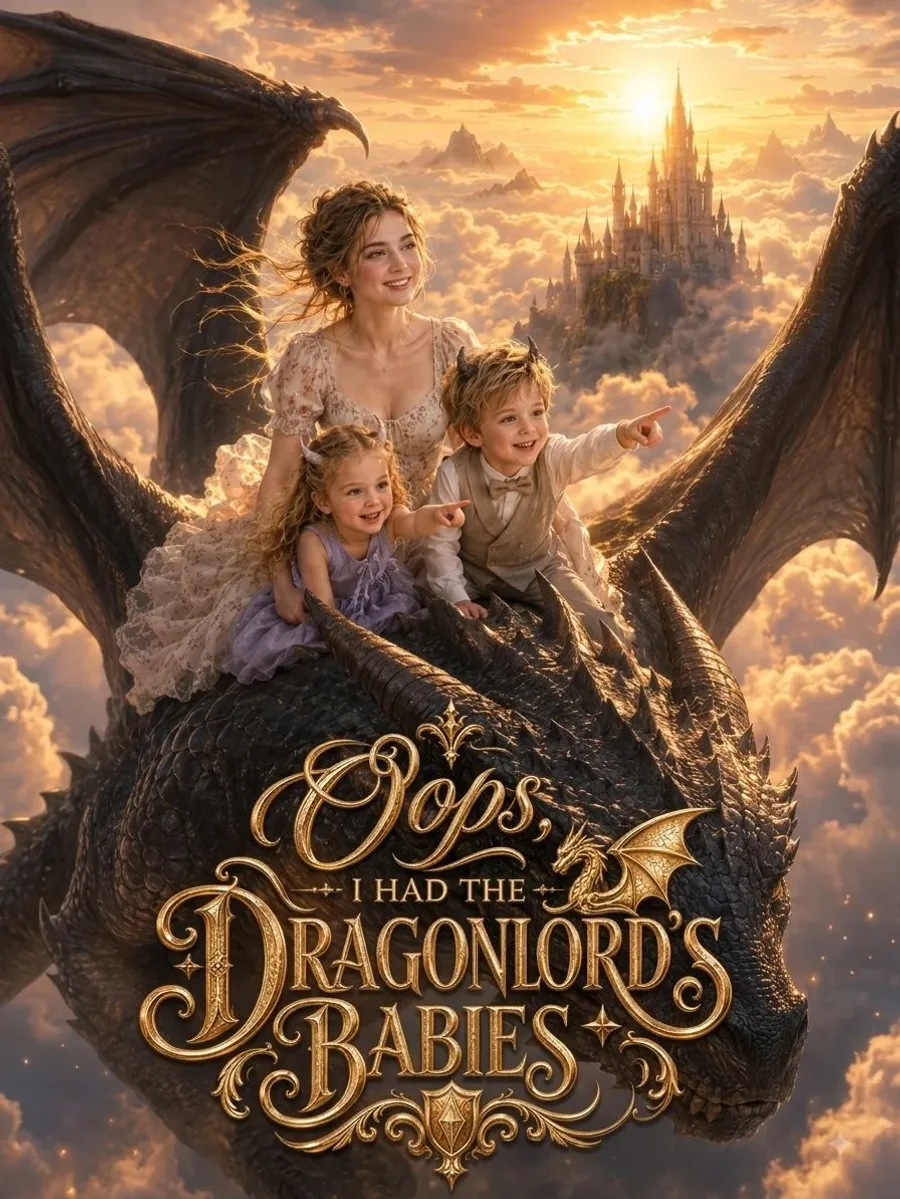
What Is a Dragon Horn Worth to a Working Mother?
Madison Foster takes a job as a maid because her children have grown horns and tails. That sentence contains two rather different stories. In a children's adventure, the discovery of a tail might be an occasion for trying it out in front of the mirror. To a woman who has brought up twins alone for six years, it means finding the money for surgery. Oops, I Had the Dragonlord's Babies has a lively sense of what an extraordinary occurrence might look like to the person who has to pay the bills.
Before the twins
Madison was a successful student before a wealthy classmate's envy put her in a forest tower. The difference in their circumstances matters even in a fantasy. The classmate can turn resentment into confinement. Madison pays for the encounter that follows with the loss of her place at school. In the tower she meets Noah Lewis, a dragon lord under a curse. Afterwards she finds herself pregnant and expelled. A relationship with someone out of legend has a painfully ordinary consequence for the young woman's education, and nobody at school is going to raise the children whose existence has become such an inconvenience.
The six years she spends bringing them up supply a whole history of competence before the twins begin to look unusual. Madison has already learned what they need, handled emergencies and done the work of two parents. That is why her response to the horns has a certain touching practicality. From somewhere outside this family a spectator might recognize evidence of magnificent ancestry. Madison sees a problem for her children and goes looking for wages. It is the response of somebody accustomed to there being no other adult on hand to whom a difficult decision can be referred.
Two applications of family resemblance
The job takes her to Noah's estate. Her employer and the mother of his children fail to recognize one another; the children themselves feel drawn to Noah when they chance to meet him. That gives the ordinary secret-baby plot a delightful problem of evidence. The information is practically growing out of the twins' heads, and yet the adults with the greatest interest in its meaning cannot put their own histories together. The children are much quicker to pursue a feeling of kinship than either adult is to make sense of a bodily resemblance.
One could object that two people who shared such an extraordinary encounter ought to recognize each other sooner. What makes the device worth accepting is the reversal it allows. Madison goes to work in order to remove visible signs of the children's connection to their father. The job itself brings the father within reach. Give her a different reason to seek employment and this would be just another very convenient vacancy at a wealthy man's home. As it stands, almost every practical step she takes towards concealing the family likeness makes a family meeting more likely.
Noah has a curse to contend with, and the twins seem perfectly happy to make opportunities for the adults to spend time together. Madison occupies a more complicated position than either. She has to consider whether something that makes her children visibly different is a danger to them, a part of them worth preserving, or both. It is an unusually good question to tuck into such a breezy title. People who adore a fantastic creature in a picture book may have rather different feelings about sending a child with horns out into the world.
The story moves from a tower to a school expulsion, then jumps across the years in which the babies become children with opinions of their own. That jump earns its keep. We need Madison to have developed parental habits sturdy enough to survive the return of magic to her life, and the twins need to be old enough to act on their attachment to Noah. There is a danger in the sheer number of changes of fortune assigned to the heroine. Her interrupted education is a substantial loss. The handsome scale of the estate and the excitement of a reunion can make it easy to forget what disappeared with that earlier future.
There is something faintly absurd about two adults standing on an estate, puzzling over a question to which four small horns would seem a fairly plain answer. Madison's point of view makes the delay bearable. She has spent six years understanding these bodies as a mother does: watching for changes that might hurt, draw stares or need attention she can barely afford. To expect her to see the revelation as a genealogist would is to ask her to forget most of what she knows about her children.
The dragon romance is at its most affecting when magic is an expense on somebody's household budget. Noah might recognize a sign of ancient inheritance. The twins might like to get to know the man to whom they feel so close. Their mother has already gone looking for work. Of the three responses, hers tells us most about what the family has been doing while its spectacular history waited to catch up.
Genre and themes
Primary genre: Fantasy family romance. Themes: dragon ancestry, secret twins, a cursed parent, household employment, belonging.
Main Characters
 Madison Foster
Madison is a former high-achieving student who has raised dragon-born twins alone for six years. When their horns and tails appear, she takes a maid’s job to afford their care.
 Noah Lewis
Noah is a dragon lord Madison met while trapped in a tower, and the father of her twins. A curse and years apart leave him facing a family he never knew he had.
Frequently asked questions
Why does Madison take a maid's job?+
She needs to earn money for surgery after her children's horns and tails appear.
Where did Madison first meet Noah?+
She met the cursed Dragonlord in a forest tower where a jealous classmate had locked her up.



