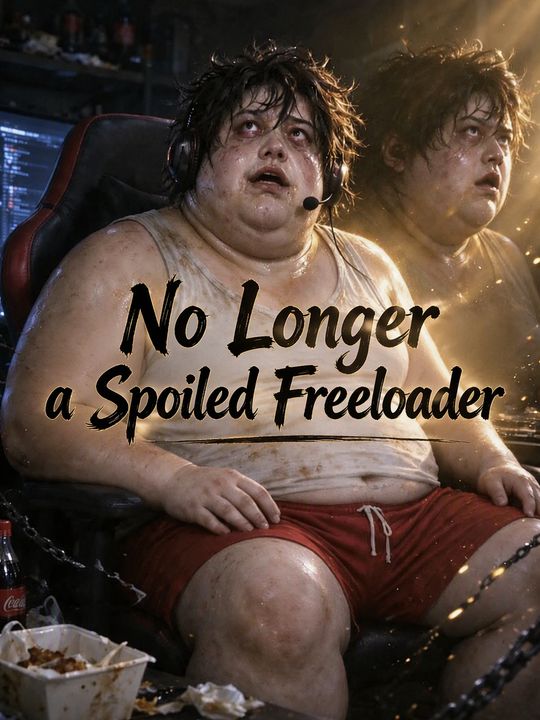
Selling the house is a drastic thing to do about a son who will not move out. For Zhu Tou's parents, in No Longer a Spoiled Freeloader, it becomes thinkable after his father suffers a heart attack. Zhu is twenty-eight and has organized his time around video games while his parents support him. We meet this arrangement at the point where it can no longer quietly renew itself. His father cannot be relied on to keep going as before. His parents withdraw their support, sell the house, and make Zhu leave. A family accustomed to solving one person's problems can no longer afford to treat his dependence as a temporary inconvenience.
There are two losses here, and only one is immediately obvious to Zhu. He loses a place to live and the ability to spend his day as he wants. He also loses the assurance that someone else can absorb the cost of his delay. His father gets sick. Suddenly even a parent who wants to keep helping has a limit. The man who has been able to choose the moment when he starts doing something about his future finds himself living on the timetable of people whose bodies and resources have limits.
Genre and themes
Primary genre — Family Drama
Themes — Urban life, Melodrama, Slice of life
What a family can keep doing
It is tempting to describe the parents as enablers and leave it there. Their decision is more interesting because it means giving up a place of their own. They are not merely taking away somebody else's privilege. Selling the house changes their lives as well. That makes it possible to see the years of support as something more complicated than a long failure of discipline. Parents often do things for a child because withholding help would hurt everyone involved in the moment. The drama imagines what happens after that trade stops being one they are free to make.
Zhu's father's heart attack also separates the father's role from the work he has been doing. A son who thinks of parental help as part of the background has reason to see an income or a place at the table as something that simply exists. The sudden illness changes the way those things register. In the immediate crisis, Zhu has an opportunity to see the person whose effort he has been able to take for granted. The difficult part of his redemption is making that perception last after the shock wears off.
At the construction site
The construction job makes the premise concrete again. Work has a schedule and a physical cost that cannot be postponed by leaving a conversation with his parents unfinished. Going to a site also puts Zhu among people for whom his family position is irrelevant. At home his parents have a history with him and good reasons to want his life to turn out well. The job has requirements that exist without that history. Turning up matters even if nobody has an investment in what it means for his character.
This is where the drama finds a stronger measure of progress than the number of apologies Zhu can offer. A man discovering that he needs to work may be frightened by the distance between his habits and what the job asks. A man learning to provide for a household needs to keep working when the original crisis is no longer before his eyes. The setting implies that difference in a way a single speech about gratitude could not. What looks like a small practical achievement to other people can mark a change in Zhu's understanding of who gets to count on him.
The site also provides a limit to the story's moral claim. A demanding job can reveal how little Zhu understands about the time and labor involved in supporting somebody. Physical hardship alone cannot make him considerate. The script needs his choices about his family to carry the argument after it has shown he can endure the work. The premises of the heart attack and the sale offer a way to do that, because his decision to become reliable has specific people to answer to. His parents' situation would matter even if he found an easier way to earn a wage.
A slower measure of change
The beginning has three quick disruptions at its disposal: a medical crisis, the loss of the house, and the withdrawal of support. The middle benefits from having to proceed at a different speed. A construction job gives the series a reason for some of Zhu's progress to arrive through repetition. The attraction of the familiar comeback formula is the distance between where he begins and where he might end up. The variation here is that there is no need for him to discover he was a wronged genius or secretly entitled to a better position. The contribution he learns to make is valuable because it can be depended on.
The house sale would be a bleak last word on these people. The construction site gives Zhu something to do on an ordinary day when his father’s heart attack is no longer right in front of him. That’s the stretch I found worth following, especially if you prefer a comeback that has room for the people who paid for the old habits.
Main Characters
 Zhu Tou
A twenty-eight-year-old who spends most of his time gaming until losing his parents' support forces him to start earning a living.
- Zhu Tou's Father
His heart attack changes what the family can afford to keep doing for its adult son.
- Zhu Tou's Mother
One of the parents who decides their son must learn to support himself after the family's circumstances change.
Frequently asked questions
What changes Zhu Tou's life?+
His father suffers a heart attack. His parents sell the family home and withdraw the support he has counted on.
What work does Zhu Tou take on?+
He takes work on a construction site and learns to sustain the routine and physical effort the job requires.
How many episodes are there?+
The cataloged edition has 49 episodes.



