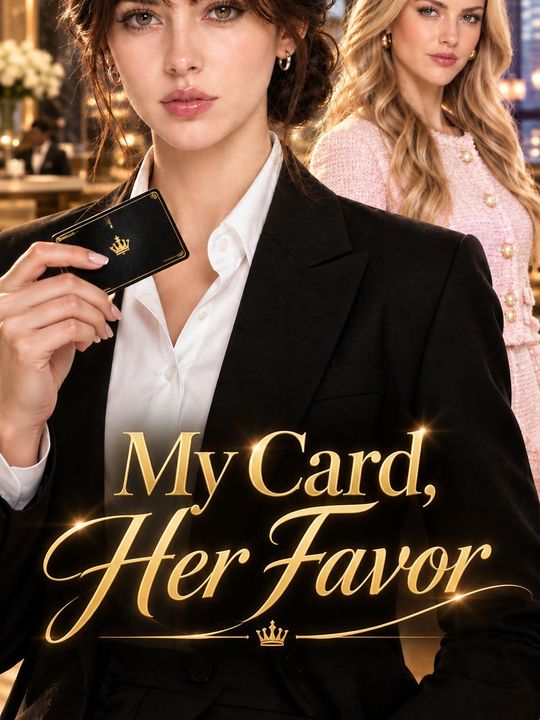
Lily invites her coworkers to dinner. Bella gets to decide whether Lily has paid for it. These would be unrelated privileges in a healthy office. At the restaurant in My Card, Her Favor, the colleague who wants the thanks plans to use a company hospitality account that Bella administers. The most satisfying object in the opening dispute is a payment PIN. You can act as if you own a table full of food, and the rest of the party can take you at your word, but the person processing the bill is going to need something more convincing.
There is a reason to spend time at the table before getting to who pays. Lily's performance makes everybody an interested party. They have been offered an expensive meal, and each gesture of pleasure helps establish who in the room deserves credit. Bella's resistance can then be read as an objection to her colleagues enjoying themselves. The restaurant scene is funny and uncomfortable in the way an office party can be when everybody has agreed to keep smiling for slightly too long. Preventing the company from paying would be easy if Bella only had to make a decision at her desk. Doing it in front of people who have already eaten is a social decision, too.
The card belongs to the company
Bella's job gives her control without giving her much status. Look at what Lily wants to take from her. The money is the company's, but the responsibility for keeping it safe is Bella's. Lily would get the credit for the evening if her appropriation worked. Any awkward question about the account could then land with the person whose job it is to answer for it. The distribution of benefits and consequences is what gives the scene force beyond the bill itself. It is a miniature version of an office in which one person gets to present an accomplishment and another gets to explain how it happened.
Bella's decision to set a payment password before the dinner is the crucial early move. It shows that she understands the situation well enough to prepare for it instead of relying on being able to argue convincingly after the charge. The password changes who has to do the explaining. Lily can keep insisting that she has everything taken care of, but she cannot make the payment system share her confidence. The drama's cleverest choice is to settle a dispute about personality through an ordinary control that shouldn't need a personality at all.
Jason's involvement makes the social pressure more credible. When a coworker backs a generous offer, somebody with doubts can look like the person starting a fight. What Bella knows about the money cannot make the others want to interrupt their evening to hear it. She risks an accusation of selfishness by acting carefully. The audience, knowing what the payment would mean, has a chance to see that the apparently tedious person in the room is the one whose diligence makes everybody else's freedom possible.
Where the office drama fits
Primary genre — Business
Themes — Revenge Drama, Urban life, Melodrama, High society
From the dinner bill to the gift boxes
The next useful escalation is a misprint on a gift-box project. The series could have made Lily attempt a second version of the same dinner. Instead it moves the struggle into a task whose consequences cannot be halted by entering a PIN. Lily and Jason have a reason to keep their distance from the error, and their willingness to shift blame onto each other exposes the limits of the alliance that served them well at the restaurant. Bella must repair a problem and preserve evidence of how it happened. Managing a balance protected her from somebody else's decision. Fixing a production error means making decisions other people depend on.
The change gives Bella a fuller character than the quick satisfaction of the restaurant scene suggests. Standing firm can make her an appealing protagonist within minutes. Taking responsibility for a job others would like to disclaim tells you something more about what she does when she cannot hand a problem back to its owner. The drama recognizes this distinction when it ties her prospects at work to her competence. She deserves to be judged on the way she handles the project, quite apart from how pleased the viewer might be to see her colleagues embarrassed.
The pacing plays to the format's strengths. The table offers a problem that can be understood before you know how the office is organized. The payment attempt provides a visible answer without forcing the series to resolve the social relationship immediately. A more involved production dispute can then build on the viewer's knowledge of how these people distribute credit and blame. The risk is that a colleague already exposed in one setting may be too easy to read in the next. For the gift-box sequence to carry its own interest, the question needs to be how Bella can fix the thing on time, rather than simply how long it will take somebody else to notice what Lily is doing.
Anyone who has chased an expense approval will know why the PIN is funnier than a speech. The gift boxes carry the joke into harder territory. Bella can stop the dinner charge with a number, but she has to fix the misprint and keep a record of who made it. That second job is the better case for her promotion.
Main Characters
 Bella
The employee who manages the hospitality account and knows why other people's charges can become her responsibility.
 Lily
A coworker who seeks credit for an expensive meal she expects the company to fund.
- Jason
A coworker drawn into the disputes over Lily's offer and the later gift-box project.
Frequently asked questions
What is the card in My Card, Her Favor?+
It is associated with a company hospitality account that Bella oversees.
What happens after the dinner dispute?+
A misprint puts the team's gift-box project at risk and brings the question of who takes responsibility back into the office.
How many episodes are there?+
The cataloged edition has 36 episodes.



