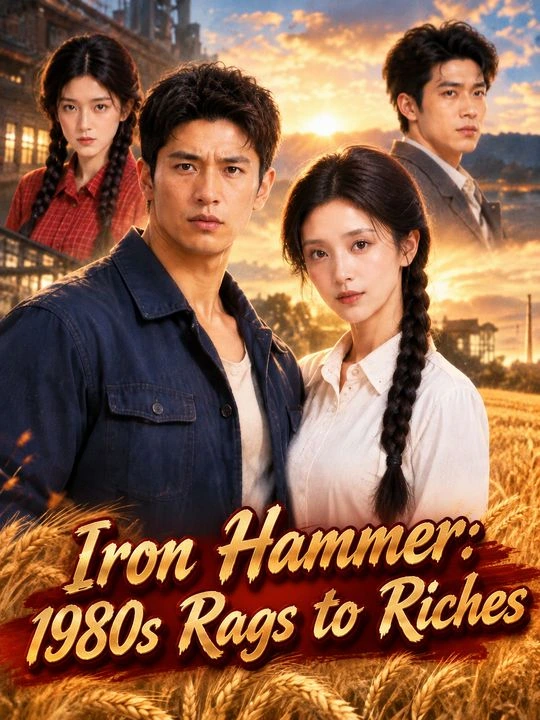
A government order is a peculiar thing to cheer for until you’ve seen what it takes Zhou Jianguo and Shen Dongmei to get in front of a buyer. In Iron Hammer: 1980s Rags to Riches, they start with a workshop and a trade that has uses well beyond their own household. People need farm implements. If the couple can make something better suited to that work than the imported alternatives, there is a reason to come back to them next season. Nobody placing an order has to know Zhou was driven out of his family home, which is one of the nicer things about customers. His relatives had their chance to judge him. The buyer has a much more limited decision to make.
The family rupture comes early. Zhou's younger brother and fiancée betray him, and his stepmother drives him out. That is a lot of bad news from people who previously had some claim on his loyalty. It is also a convincing explanation for why starting over requires more than a change in attitude. Zhou has to find a livelihood and establish a household that does not depend on the people who expelled him. The marriage to Shen Dongmei changes the size of that undertaking. The decisions they make from there have consequences for a second person, and whatever success the workshop brings will have been earned by two people taking a chance on it.
Genre and themes
Primary genre — Family Drama
Themes — Rural enterprise, betrayal, marriage, manufacturing, economic mobility
What a government order means to these two
The choice of agricultural tools makes the 1980s setting do something tangible. There is a market for implements that do a particular job, and the couple has to find a way into it from a workshop they build themselves. The prospect of imported competition means Zhou cannot rely on being the wronged man in every exchange. His brother might be a good reason to leave home. He is no reason at all for a purchaser to place an order. That distinction gives the rise in fortune more substance than a familiar sequence in which every stranger is astonished at the hero's sudden resources.
The people with a say in Zhou’s future change as the workshop grows. At first there is his stepmother, who can decide whether he has a place to sleep. By the time he and Dongmei have something to sell, a buyer can go elsewhere because a supplier has made a better implement. Zhou has been badly treated at home. The person looking at the tools has no reason to know a thing about it. Each change alters who can make a decision about Zhou's future. By the time government buyers are involved, the family can no longer be the only audience for his progress.
Dongmei is especially important before that progress is visible. Zhou has already been disappointed by a person he expected to marry. His decision to build with someone else says more about him than another speech about what his relatives have done. Dongmei's participation can also carry a story of its own. A spouse helping establish a business has a stake in whether taking the next order or confronting the next competitor is worth the uncertainty. There is room for a good domestic drama in how the two put up with ordinary uncertainty when they have already made one very large decision together. The business matters because they both have to live with it.
A family feud doesn't teach you how to manufacture anything
The first part gets rid of Zhou’s old life pretty efficiently. I’d give the workshop more time. Before the large orders arrive there’s a stretch in which he and Dongmei still have to find out what the two of them can make. Skipping over it would leave Dongmei with little to do that might surprise either her husband or the viewer. A mistake in the workshop ought to have a different flavour from an insult at home, especially when the two people who have to put it right have chosen to work together.
The bet on manufacturing is what separates this comeback from the usual story about a man getting rich in time to go home and prove a point. A procurement win sounds dry, right up until you picture a small shop having to fill the order it has spent all that time trying to get. There’s a useful second question inside the first victory. Can they do it again, on somebody else’s timetable and with two livelihoods on the line?
Iron Hammer is best approached as family melodrama with dirt under its nails. The early betrayals are concentrated enough for anyone waiting to see the old household lose its hold on Zhou. The slower appeal is watching a couple decide what to do once those people are out of the room. Dongmei and Zhou have customers to find and tools to make. The prospect of their being needed for a skill is more satisfying than the prospect of their being missed by people who never valued them.
Main Characters
 Zhou Jianguo
Driven out after a family betrayal, Zhou starts over by making farm tools with Shen Dongmei.
 Shen Dongmei
Zhou’s wife and partner in the venture. She helps build the workshop that becomes their livelihood.
 Zhou’s younger brother
His part in the betrayal helps bring Zhou’s old life to an end.
 Zhou’s former fiancée
Her betrayal ends the marriage Zhou had expected and adds to his break with his family.
- Zhou’s stepmother
She turns Zhou out of the family home after the betrayal by his brother and fiancée. Her decision leaves him without a household to fall back on when he starts over.
Frequently asked questions
What does Zhou build after leaving home?+
He and Shen Dongmei set up a workshop making agricultural tools.
Who competes with the workshop?+
Imported suppliers are among the alternatives buyers can choose as the workshop goes after bigger orders.
How many episodes are listed?+
The series listing identifies 75 short episodes.



