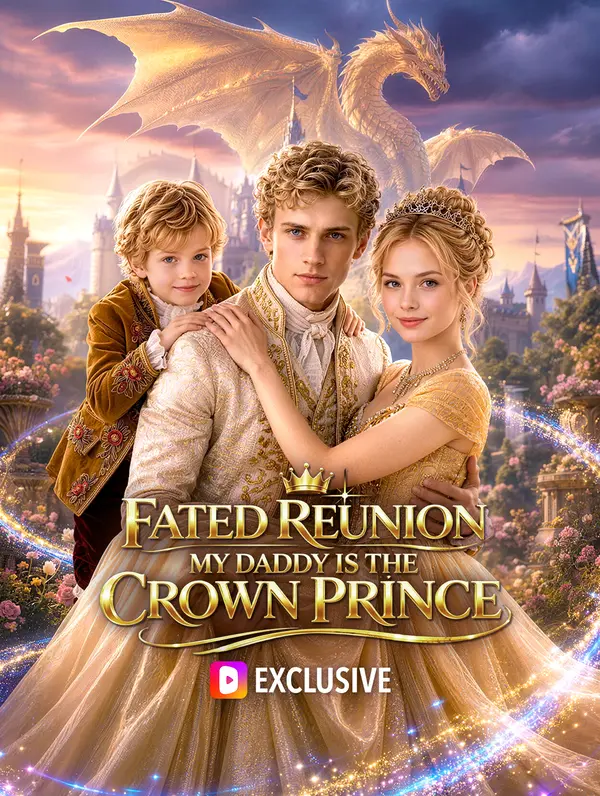
The royal court needs to know whose child Mark is. Mark already has a mother who knows where he has been for seven years, what he has survived and how much a promise of protection can be worth. A family tree answers exactly one of those questions.
Fated Reunion is at its most interesting when it asks how much that answer might cost the family it is supposed to put right. Even a favorable answer would leave Brenna with the problem of who gets to act on it.
Brenna had already fled her own father when she spent a night with Prince Edmund and disappeared from his life. The original encounter belongs to a period in which she was getting away from a family arrangement she could no longer endure. Seven years later, Edmund rescues her and Mark from abuse. He brings the possibility of safety and a new problem. Returning with a prince means returning to a world that cares a great deal about how his partner and his son came to stand beside him. The physical escape that protects Brenna one day can make her answerable to new people the next.
What a marriage can do for a child
Brenna and Edmund agree to present themselves as married at court. The useful thing about their arrangement is that the same public story serves different private needs. Brenna has to give Mark as secure a place as she can. Edmund has to answer to a court where personal choices carry dynastic consequences. A performance of marriage can protect both of them long enough to claim a place together. It also gives anyone who objects a story to challenge and offers the family precious little room to explain why a different account might be closer to the truth.
Edmund is easiest to read through the distance between his two acts. Rescuing Brenna and Mark is something a prince can do when he sees immediate danger. Agreeing to share a public story about the family requires him to remain implicated after the immediate peril has passed. He has institutional protection Brenna lacks, and his participation only becomes valuable to her if he is prepared to put some of that standing at risk. The story is more absorbing when the marriage offers Brenna a partner she can evaluate than when it uses his title as a guarantee that he will get everything right.
Genre and themes
Primary genre — Royal fantasy romance
Themes — Hidden heir, second chances, marriage of convenience, court intrigue, protective motherhood
A holy trial changes the terms
The court's rivals force the issue by demanding a holy trial that could expose Mark's parentage. This is a well-chosen escalation because the couple's original solution rests on ordinary social agreement. If the relevant people accept a marriage, the family has somewhere to stand. A ritual invokes another kind of authority altogether. It can put the adults in a position where they are unable to control who asks for proof and how a child is expected to provide it. Mark's stake in the result is immediate even though the adults have most of the language and standing with which to argue the case.
Seven years pass between a night with Edmund and the rescue. The show can make that jump in an instant. It would be a mistake to let Edmund catch up just as quickly. The child he finds has routines and loyalties already, and Brenna has experience of making decisions without him. When they pose as married, there's room to see Edmund learning to live among people who already belong to each other. The trial takes that breathing room away. Brenna has to go from leaving an abusive situation, to staying and persuading a court, to facing a test whose rules are no longer hers to negotiate.
Secret children and marriages staged for an audience are familiar romance ingredients. The holy trial moves them into a political context where the proof that might validate Mark can also make him a prize. That is the show's liveliest invention. Its potential weakness is the size of the court conflict relative to a small boy. Every new demand can make Mark more important on paper while leaving him less to do as a character. The setup works best when the adults' maneuvering leads back to sensible concerns about how he will live after they have finished talking about his lineage.
Give this one a chance if you like a second-chance romance better once the couple has a practical problem to solve. Brenna has good reason to measure Edmund against past experiences of people claiming authority over her, even after he has done the brave thing and intervened. I find that measured response more moving than the rescue itself. The series uses the court and its holy trial in the manner of a fairy tale. Its most persuasive claim is small enough to fit outside any palace. The people who can prove where a child comes from still have to show that they can make a home for him.
Main Characters
 Brenna
 fled her father’s plans years ago and raised Mark alone after one night with Prince Edmund. Returning to court means defending her son’s place without giving up her independence.
 Prince Edmund
 rescued Brenna and Mark from abuse, then agreed to present himself as her husband at court. He must balance genuine protection with the political consequences of claiming a child as his heir.
 Mark
Mark is Brenna’s seven-year-old son, whose birthright becomes the subject of a royal holy trial. He gives the adults’ arrangement a human cost beyond the court’s succession dispute.
Frequently asked questions
How long are Brenna and Edmund apart?+
Seven years pass between their first encounter and the reunion in which Edmund rescues Brenna and her son Mark.
Why do they pretend to be married?+
They need a public arrangement that gives their family standing and protection at court, where Mark's origins can be used against them.
Where can I find the 48-episode Fated Reunion series?+
Search for the full title on DramaWave. Its listing and player show what is available to preview and which episodes require an unlock.



