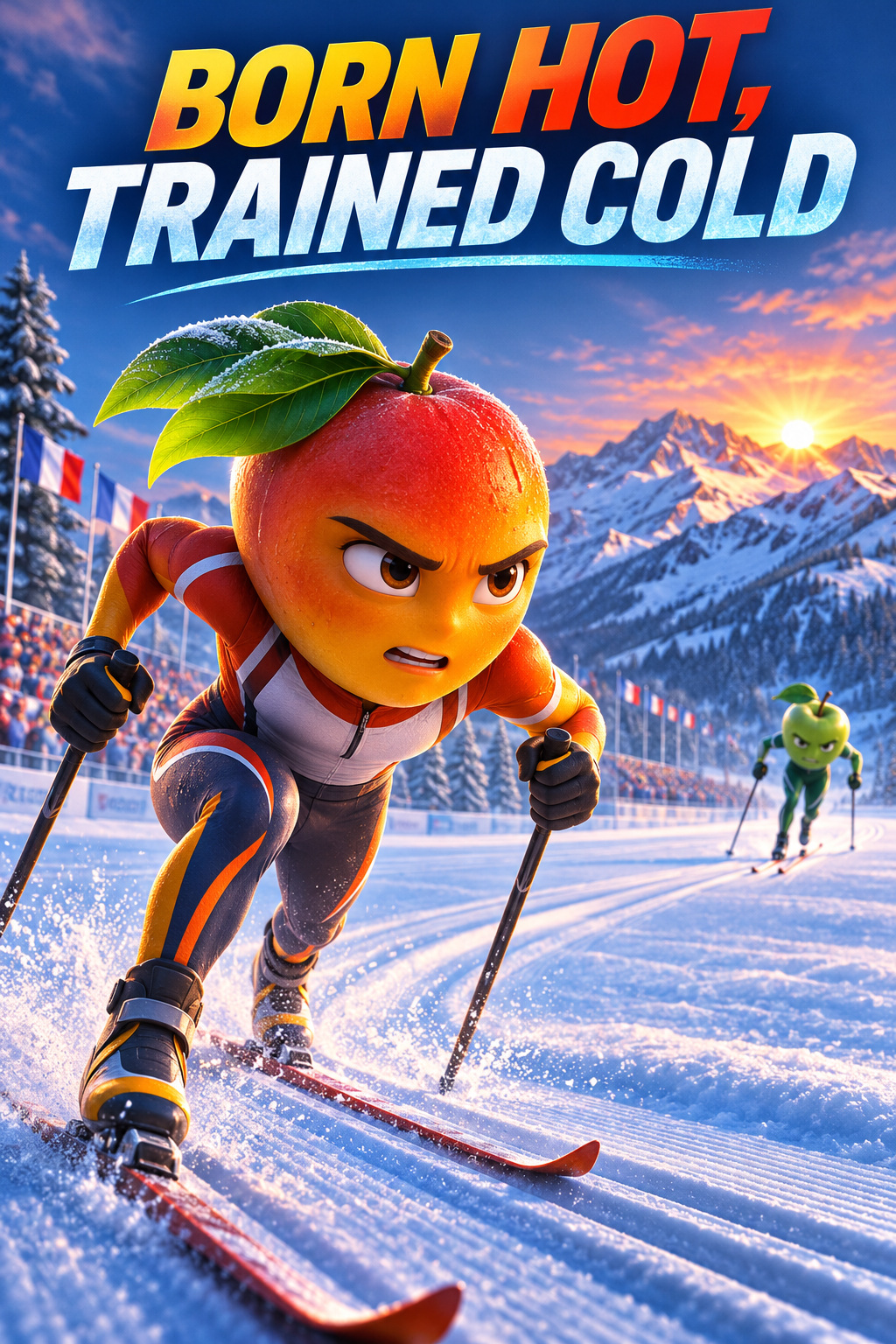
The house is full of fans, the electricity bill is getting out of hand, and Mango is still too hot. Outside, the temperature is well below freezing. That makes his pitch to his mother sound outlandish until you’ve spent a minute with him. He wants to enter a cold-endurance contest. There’s a substantial cash prize, and the conditions that worry her might be the first ones he’s been comfortable in all day.
The contest that ends up being a tryout
The earliest obstacle is getting permission. Mango is a teenager and needs his mother’s consent. She has better reason than anyone to understand his unusual tolerance and an equally good reason to insist that he quit if the conditions get dangerous. The electric fans and the conversation over the bill give the opening an appealing domestic scale. Before Mango’s ability means anything to a national team, it’s a nuisance the entire household has to pay for.
The cold contest has the clarity of a playground dare. People drop out as the temperature falls. Mango, who entered to ease a family problem, is beginning to see that he’s comfortable doing something experienced competitors struggle to endure. The most useful person he meets there is Pineapple, a former Olympic skier. Pineapple offers to get him a tryout for the French cross-country team if Mango can beat him in the final challenge. He also has the good sense to ask if Mango knows how to ski.
This is where a pleasant stunt finds a story with somewhere to go. The invitation rewards Mango for what he’s done, then moves him into a sport where that same accomplishment counts for very little by itself. He’s never skied, and the fact he copes well with cold says nothing about whether he can balance, climb or distribute his effort over a long race.
Learning to move changes the problem
Pineapple’s role becomes more interesting once there’s a practical job to do. It would be easy for a former Olympian to serve as the person who recognizes a prodigy and hands him a route to glory. The training adds friction to that relationship. Pineapple sees enough in Mango to bring him along, but has to explain things that people with years on skis have long since stopped thinking about. For Mango, accepting the invitation means accepting the embarrassment of being a beginner in front of people who can do the basics effortlessly.
The early uphill practice is a good turning point because it exposes a problem the contest never tested. Mango produces heat when he’s making an effort, and hard training can make him overheat in the environment he thought would suit him best. Standing in a cold room has become the easiest version of what he needs to do. Learning technique is part of learning how to manage his body over a distance.
That makes Mango’s persistence more appealing than the feat of withstanding a falling thermometer. It takes a certain humility to ask to learn how to stand on skis after defeating somebody who competed at the Olympics. Mango has an unusually personal reason to keep getting up. He has found a place where the cold can feel like relief, if only he can learn to move through it.
What the longer race can show
Glacier, the reigning champion, gives the Olympic portion a more substantial measuring stick than the jeers of other athletes. Mango can notice the ease with which a veteran gets across snow and understand what an advantage years of technique give him. A short sprint and a long-distance race also ask for different things. The long event gives the story time to put his progress in pacing and his problems with heat on the same course.
There’s something particularly effective in making the cold serve different dramatic purposes as the competitions change. In the opening contest it eliminates rivals. In practice it makes it possible for Mango to stay out there, until exertion gets the better of him. In a distance race, managing his temperature becomes a question of timing. A repeated setting feels useful when the character keeps learning a different way to be in it.
The path from total beginner to international competition is wildly compressed. Anyone hoping for a realistic account of an Olympic selection cycle will find it a stretch. Within its own storybook register, the series earns some of that leap by showing skills Mango lacks and giving setbacks a physical cause the audience can follow.
Genre & Themes
Primary genre — Animated sports drama
Tags — Underdog Athlete, Cross-Country Skiing, Mentorship, Self-Acceptance
The fruit makes sense after a while
The fruit characters supply the most conspicuous bit of invention. Underneath the joke is a familiar sports plot about a talented outsider who needs a coach and a patient family. The reversal of the usual cold-weather struggle does more to distinguish it. Snow is relief to Mango, and a fast start can be dangerous even when he has energy left. That gives the training sequences an argument to make about what a gift is worth before a person learns to use it.
It’s worth a look for viewers who like a sports story with uncomplicated stakes and a surprisingly well-defined physical problem. The opening’s absurdity should tell you pretty quickly whether you’re in the mood. If you are, the pleasure is watching the kid who can stand in ice take the considerably harder step of learning to ski.
Main Characters
 Mango
Mango is a teenager who feels unusually comfortable in freezing weather. A cold-endurance contest brings him to a ski tryout, where he learns that resilience alone cannot replace technique.
- Pineapple
A former Olympic skier, Pineapple recognizes Mango’s potential and offers him a route toward the French cross-country team. He becomes both mentor and demanding judge as Mango starts from scratch.



