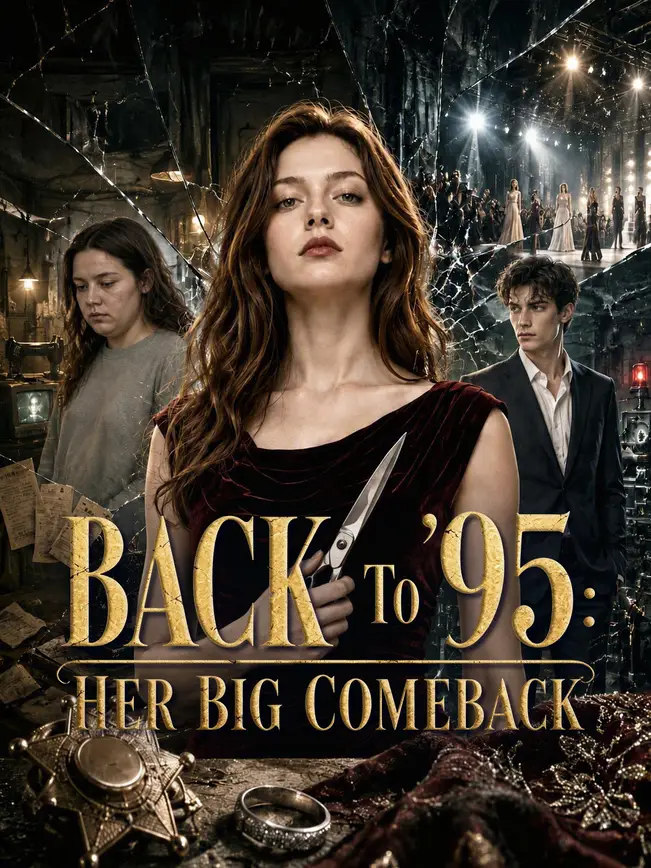
What can a designer take back to 1995?
A designer can lose a studio, a client list and an entire professional reputation and still know where to cut a piece of cloth. Fiona gets an unusually thorough opportunity to test that proposition. In 2026 she is at the top of her profession. After her death she wakes in 1995 with a marriage on the verge of collapse, debts to pay and a reputation that seems to have been settled in her absence. The one piece of professional equipment that has made the journey with her is her eye.
Back to 95 - Her Big Comeback is candid about the wish it fulfils. Somebody who has spent years learning a difficult trade gets to start again with the benefit of experience. There is a sting in the offer. Fiona occupies the life of a larger woman who is already treated with contempt. Her husband Carter wants a divorce. Before she can enjoy any advantage from knowing where fashion is headed, she has to convince people who think they know everything worth knowing about her to look at what she makes.
Making a living before making an entrance
Debt is a smart early obstacle because a creditor has little use for a prediction about what people will wear thirty years from now. Fiona needs work somebody will pay for in the present. That requirement saves the premise from becoming a parade of knowing references to the future. A trained designer can judge proportion, understand how material will hang and decide what can be done with the resources to hand. Those skills can travel across decades even when the market for a particular look cannot.
Carter's position gives the comeback an uncomfortable emotional dimension. Wanting to leave is one of the first consequential things we learn about him. His interest revives as Fiona becomes independent. There is satisfaction in seeing a woman acquire choices after being treated as somebody else's regrettable obligation. There is also a fair question about the timing of his change of heart. A man impressed by an accomplished designer still has to account for the way he treated his wife before other people found her impressive.
The weight-loss strand deserves similar scrutiny. The premise establishes that Fiona changes physically as well as economically. A makeover offers a short drama an easy visual shorthand for the passage of time. It can just as easily imply that the people who despised her had correctly identified a problem with her appearance. The strongest counterargument is the work itself. The woman who could see the possibilities in a length of fabric possessed that ability before anybody reconsidered her looks. It is worth keeping track of which transformation actually pays the bills.
The collection someone tried to ruin
The most persuasive demonstration of Fiona's talent comes when garments have been deliberately damaged. An approaching show gives her three unattractive prospects. She can withdraw, put inadequate work in front of an audience, or use the damage as a design constraint. Choosing the third course makes her act like a designer in a way that forecasting the next trend never could. A torn area becomes something to display deliberately. The enemy has supplied a problem for which there is no ready-made answer in Fiona's memory of the future.
It is a particularly good choice for a story about fashion because the audience can grasp what is at stake without knowing the technical vocabulary. A concealed repair asks the viewer to admire how thoroughly the original has been restored. A visible one invites a new judgement of the whole garment. That is close to what Fiona has been asking the people around her to do since she arrived. The visual analogy earns its place through the practical business of getting clothes onto a runway in time.
The workshop also gives the romance a better language than declarations. A sewing machine needs attention. A man who doesn't know how to sew can still help keep the machine running. Shared labour puts a limit on grand gestures. The designer has to retain authority over the collection, and anybody genuinely interested in helping must find a task she needs done. A few minutes of that sort of support tell us more about the possibility of partnership than another admirer expressing astonishment at her success.
A second chance with a cutting table
A career spanning debt repayment and the building of a fashion business inevitably involves compression. The runway deadline brings welcome concentration to a rise that could otherwise resemble a succession of milestones. It also reveals where a viewer might want more time. Growing a business requires repeat customers and reliable colleagues as well as inspired decisions under pressure. Those looking for the everyday economics of a period fashion house may find the scale of the ascent too generous.
I recommend it to viewers who enjoy watching expertise survive a change in fortune. The romantic reversal adds heat, and the time jump gives Fiona a handsome advantage, but the episode of the damaged clothes makes the case for her on much fairer terms. Everyone looking at those garments knows what happened to them. Only one person has a sufficiently interesting idea about what they could look like next.
Genre & Themes
Primary genre: Time-travel drama Tags: Fashion design, professional comeback, second-chance marriage, body image, entrepreneurship
Main Characters
 Fiona
Fiona wakes in 1995 with the perspective and design skills she acquired decades later. She uses that second chance to rebuild her career while her marriage and debts remain unresolved.
 Carter
 is Fiona’s husband in the life she wakes back into. Their strained marriage is one of the problems she must confront as she decides whether her second chance will change their future.



