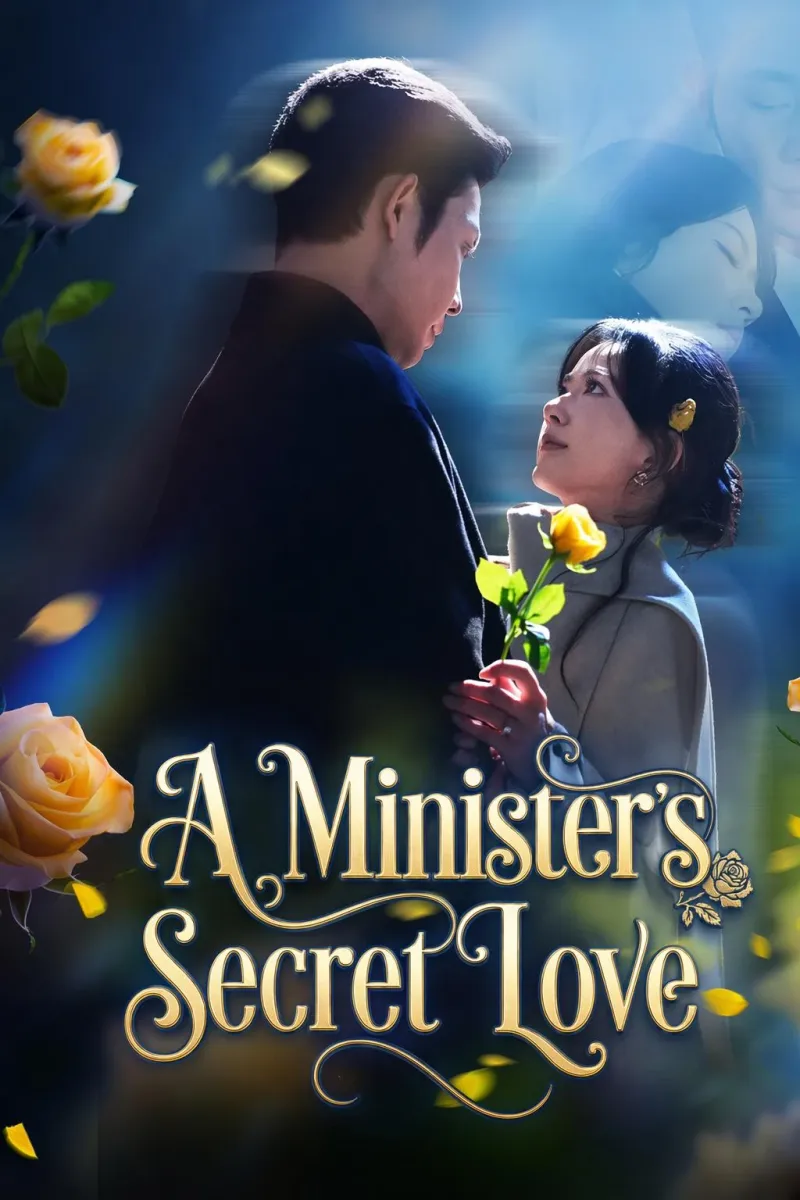
The Yellow Rose in A Minister's Secret Love
A pressed flower makes a poor contract and a remarkably good exhibit. It can tell you that someone cared enough to keep it. It cannot establish what the recipient of that affection knew, or whether she would ever have agreed to be pursued. Give such a flower to a powerful minister. Give the question of what it proves to the lawyer he has married. A Minister's Secret Love has found itself a rather better romantic puzzle than the usual one about when an uncommunicative man will finally bring himself to say something nice.
The marriage is political. The lawyer has been forced into it, and her husband has twelve years on her as well as the authority of his office. She comes to the arrangement equipped to recognize whose interests an agreement serves. She has considerably less freedom to renegotiate the terms of this one. That combination makes her more intriguing than a heroine who needs somebody to explain the arrangement to her. Understanding perfectly well what is happening can be its own kind of frustration when everyone else expects you to accept it.
The case for reading him generously
One might reasonably see the minister as a man who has learned to keep his own counsel. Political work rewards discretion. In circumstances touched by conspiracy, a misplaced confidence might imperil somebody besides the speaker. Then there is the dried yellow rose, kept for eight years from the day he first saw the woman who is now his wife. Eight years is a substantial stretch of private life for a political calculation to account for. From his side of the marriage, an arrangement that looks mercenary may be the nearest he has come to obtaining the future he wanted.
It is an appealing interpretation, and the drama has the good sense to lodge it in a perishable thing that somebody has taken care to preserve. A costly gift could be bought the afternoon before it was needed. A flower saved for years asks us to imagine all the unremarkable days on which the minister might have discarded it. Dating his attachment gives the man's reserve a specific emotional cost. He has been able to command a great deal in public while keeping a rather small, fragile expression of wanting something in private.
Genre and themes
Primary genre: Political romance. Themes: marriage of convenience, age difference, concealed devotion, conspiracy, professional rivalry of wills.
What his wife could put under cross-examination
For the lawyer, the same eight years look different. How fortunate he has been to have all that time to become accustomed to the idea of loving her. She enters the marriage without the benefit of his private history. Discovering the rose can change her account of why he married her, but she still has every reason to examine how the marriage came about. This is where the difference in their ages acquires some force. He has had a professional and emotional head start. Their wedding puts them on an equal footing in neither respect.
The most interesting part of the premise is the work it gives the heroine after that discovery. A mechanically plotted marriage of convenience needs only a sufficiently convincing confession for the original injury to melt away. A lawyer has a professional interest in the difference between intention and effect. There is room for her to be moved by what he kept and angry about what was decided for her. A viewer who likes each romantic advance to settle a disagreement may find this a difficult couple. I found the prospect of sustained disagreement a reason to pay attention.
Time kept in two different ways
The tension outside the marriage keeps the couple from conducting a leisurely inquiry into their feelings. Danger gives cooperation an immediate purpose, and a conspiracy gives silence a more ominous sound than it would have during an ordinary misunderstanding. Inside the relationship there is a much longer clock running. The audience has to revise its estimate of the minister's past while the lawyer decides how much weight to give his conduct in the present. That is a strong design for serial romance. Information about something that happened years ago can alter the meaning of a scene between two people today.
Imagine the rose on the lawyer's desk among the papers of a client. She could readily argue that the owner cared about the person who gave him reason to keep it. The flowers people save often mark the occasions they cannot quite bring themselves to talk about. Now imagine advising that client to marry the owner on the strength of the exhibit. There is a considerable gap between those two professional judgments. The unusual pleasure of spending seventy-nine installments with this particular bride is that the minister has to live in that gap with her.
Political romance often reserves its most persuasive speech for the more powerful partner. The eloquent thing this minister has to offer fits between two sheets of paper. You might find it desperately romantic. His wife would still be entitled to hand it back and ask him a question, and I rather love her for having the training to know which question to ask.
Frequently asked questions
Why is the yellow rose important?+
The minister preserved it for eight years after first seeing the woman he would marry.
What does the heroine do for a living?+
She is a lawyer drawn into a political marriage with a minister twelve years older than her.



